“Indestructible” is a marketing word. There is no dog toy that a determined large dog cannot eventually take apart, and treating any toy as permanently safe is how pieces get swallowed. What is genuinely useful is a chewer-strength rating — an honest statement of which dogs a toy is built to withstand — plus a habit of inspecting toys and retiring them on time.
Working out what kind of chewer you have
- Gentle: carries and mouths toys, plush survives for months. Many small breeds and older dogs.
- Average: plush lasts weeks, rubber lasts a long time, squeakers eventually get found.
- Power: plush is opened in minutes, standard rubber is chewed down over days. Common in terriers, bully breeds and many working dogs regardless of size.
Chewer strength is only loosely related to size. A determined terrier can outclass a placid retriever.
Toy size, and why bigger is safer
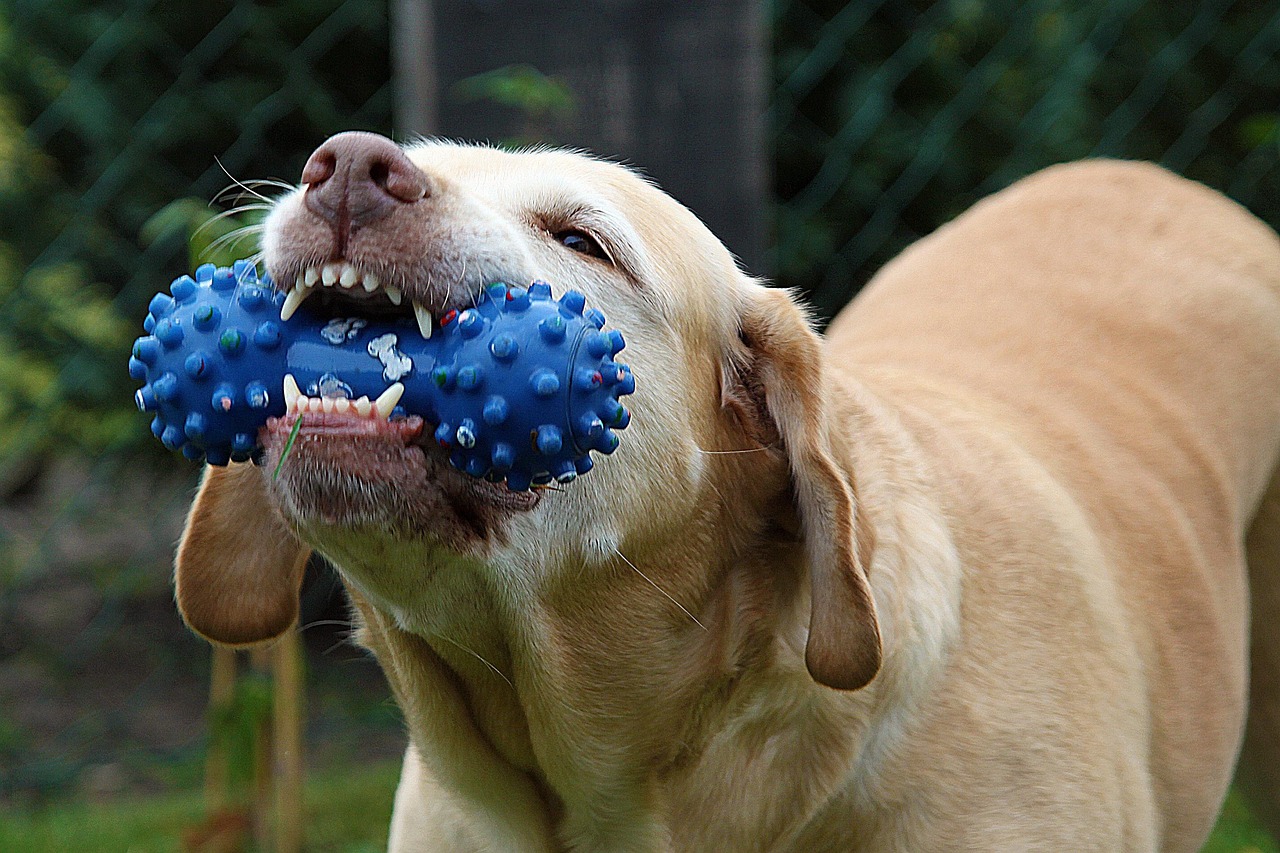
The single most important safety rule is that the dog must not be able to fit the whole toy behind its back teeth. That is the position from which a toy gets swallowed.
When choosing between two sizes, take the larger. An oversized toy is awkward; an undersized one is a hazard. That applies to balls in particular — a ball that fits neatly in the mouth of a large dog is exactly the wrong size.
What each material does
Rubber
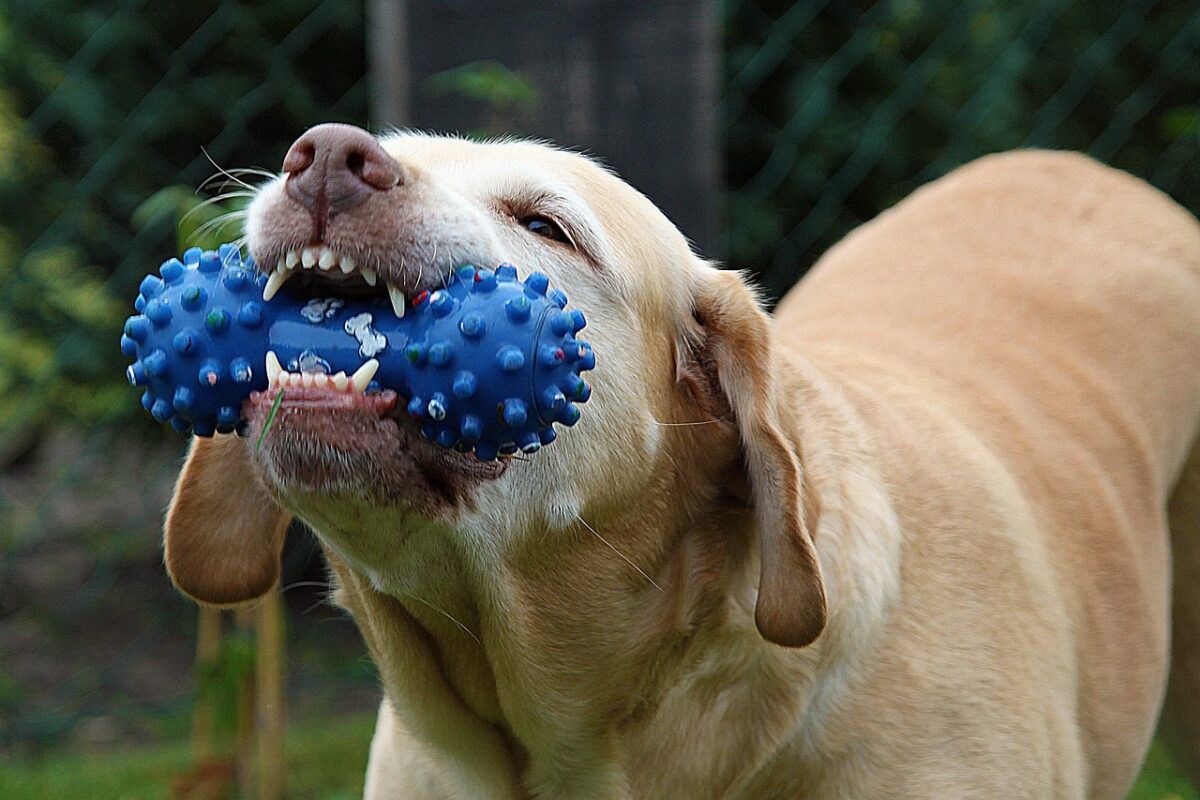
The workhorse for chewers. Good rubber flexes rather than shattering, and hollow designs can be stuffed with food, which turns a chew toy into an occupation. Retire once chunks are being removed.
Plush
Comfort and carrying rather than chewing. Perfectly fine for gentle dogs, and fine as a supervised toy for stronger ones, but plush is not a chew toy. Once the seam is open and stuffing is out, it is finished.
Rope
Good for tugging, with one specific risk: dogs that ingest strands rather than chewing them. Loose threads can cause serious internal problems, so rope toys need trimming and retiring earlier than most people do.
Hard chews — nylon, bone, antler
Long-lasting, and the category with the highest tooth-fracture risk. The rule of thumb used in veterinary dentistry is that if you cannot make an indentation with a thumbnail, and you would not want it dropped on your knee, it is hard enough to break a tooth. Slab fractures of the upper carnassial are a common and expensive result.
Our dog toys listings state the chewer strength each toy is built for, which is a more useful number than a durability adjective.
When to retire a toy
Inspect weekly, and retire immediately when:
- The outer layer is broken and inner material is exposed.
- A squeaker is accessible.
- Pieces can be pulled off with fingers.
- Rope has long loose strands.
- Rubber has cracked or gone hard and brittle with age.
A retired toy is not a tragedy. Toys are consumables in a dog household, and budgeting for that is more sensible than trying to buy a permanent one.
Supervision is not optional at first
Watch how a new toy is used for the first few sessions before it becomes an unsupervised item. Dogs approach toys individually, and the way a toy fails depends entirely on how the dog attacks it.
Toys left with a dog in a crate or overnight should be the ones you have already watched being used, in the largest size that suits.
Rotation beats buying more
Dogs habituate. Four toys available permanently become background, and the dog looks bored with all of them. Keep half in a cupboard and swap weekly, and the same toys stay interesting for far longer.
Stuffing a hollow rubber toy with part of the daily food ration turns a five-minute activity into a twenty-minute one, and it works for dogs who have lost interest in plain toys.
Cleaning
Rubber and nylon go through the dishwasher on a top rack or get scrubbed in hot soapy water. Plush goes in a laundry bag on a warm cycle. Rope can be washed but should be dried thoroughly, because damp rope grows bacteria quickly.
Do this monthly for toys in regular use. Toys carry more than people think, particularly those that get taken outside.
Getting it right first time
Buy for the chewer you have rather than the dog you would like, take the larger size when in doubt, and expect to replace things. Every toy in our dog toys range states its material and the chewer strength it is intended for, and cat play sits separately under cat treats and toppers for the food-motivated end of things.
Ask us about a specific dog, check the FAQ, or browse the store.
From our shelves
Products in this store that relate to what is covered above:
Prices are in US dollars. Delivery timings are on our shipping policy page and the return and refund policy sets out the window if something is not right.
Key points
- No chew toy is indestructible. The useful question is which dogs a toy will survive and when to take it away.
- Match toy size so the dog cannot fit the whole thing behind the back teeth; oversized is safer than undersized.
- Retire any toy once the outer layer is opened, a squeaker is exposed, or pieces are coming away.
- Supervise every new toy for the first few sessions — dogs find failure modes designers did not.
- Rotate toys weekly. Habituation, not durability, is why most toys stop being played with.
- Hard chews that do not flex under a thumbnail carry a real risk of tooth fracture, particularly for power chewers.
Related reading